Every year around June the same thing happens. People who have been training three times a week since Christmas start missing sessions, then miss a fortnight, then stop coming in until December. Crushing season starts, and a twelve-hour day does not leave much energy for the gym.
The usual mistake is trying to keep the same programme through harvest. When it falls apart, people stop altogether. Change the target for a few months instead.
Train to hold your strength
During harvest, aim to keep your strength rather than build it. Your body is already under a heavy workload for ten or twelve hours a day. Adding a hard progressive programme on top of that is how people end up injured or sick, not how they end up fit.
What you can do is maintain. Strength is much easier to keep than it is to rebuild. Two short sessions a week at a weight you know you can handle will hold most of what you built, and it means that in December you start from where you left off instead of from scratch.
Two steady half-hour sessions a week through the season beats four hard ones for a fortnight and then nothing until Christmas.
Make the sessions short enough to actually happen
A ninety-minute session is not going to happen after a long day, so do not put it in the plan. Thirty minutes is enough to maintain, and thirty minutes is short enough that you will still do it when you are tired. In practice that looks like:
- Two sessions a week, not four or five
- Three or four compound movements, not a full-body split with accessories
- Weights you could do two or three more reps with, every set
- In and out in half an hour
Pick movements that cover the most ground: something you push, something you pull, something for the legs, and something for the middle. Skip everything else until the season is over.
Train the things the work is wearing out
Physical work builds a particular kind of strength and wears out a particular set of joints. Long days of lifting, twisting and sitting in a cab tend to leave people tight through the hips and the front of the shoulders, and weak through the mid-back and the glutes. Left alone that combination is where most farm-work back trouble starts.
So through the season, weight the programme towards the things the job is not giving you: rowing and pulling movements for the upper back, hip and glute work, and a few minutes of getting the hips and shoulders moving properly before you start.
Use the hours that actually exist
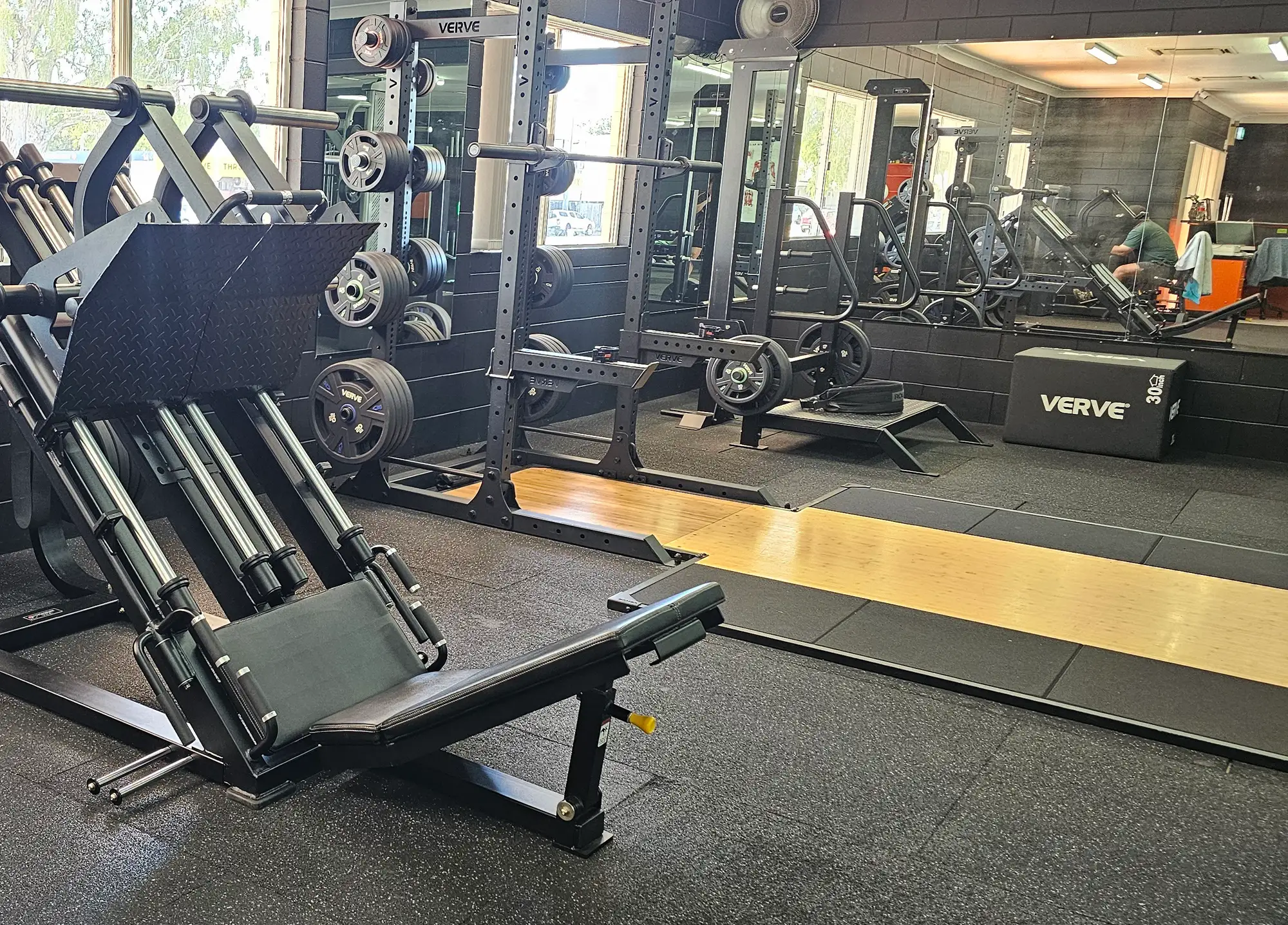
If you leave home at half four and get back at seven, a gym with normal opening hours is no use to you. With 24 hour gym Home Hill member access you can go before a start, at nine at night, or on a rain day. Plan the session for the hour you actually have.
Eat and sleep like it is part of the training
During a heavy season these two do more than anything you do in the gym. You are burning a great deal, so under-eating is a real risk. People lose weight through harvest and assume it is fitness when a good part of it is muscle. Eat enough, get protein into every meal rather than just dinner, and drink far more water than feels necessary in this climate.
Sleep matters most. If a session is going to cost you an hour of sleep on a day you are already short, skip it and train the next day.
What this looks like at the end of the season
Somebody who trains twice a week at moderate weights through crushing finishes the season having kept nearly all their strength, without having added an injury risk to an already hard job. They are back to full programming within a fortnight of the season ending.
Somebody who stops entirely in June starts again in December having lost a significant amount of what took them a year to build, and spends the first two months getting back to where they were.
If you want a programme written around your roster, personal training Burdekin is for. Or ring the gym on 0457 067 391 and ask.